A custom lanyard sounds like a simple order. Pick a color, add a logo, attach a clip. Done.
In practice, the gap between "I need custom lanyards" and "I'm ready to place an order" is where most buyers either get it right or end up with something that doesn't work — wrong width, color that doesn't match the brand, hardware incompatible with the badge, or a design file that holds up production for three days.
This guide walks through every decision so you arrive knowing exactly what you want — and if you don't, we'll help you figure it out.
What "Custom" Actually Means
Custom lanyards aren't just lanyards with a logo. Every element can be specified — and each one affects the final result.
The tape — the strap itself — determines how the lanyard looks, feels, and holds up. The print determines how accurately your branding is reproduced. The hardware — clips, buckles, attachments — determines how it functions. Get all three right and you have something that works well and looks professional. Get one wrong and it shows.
Step 1: Choose Your Material
Polyester (PET)
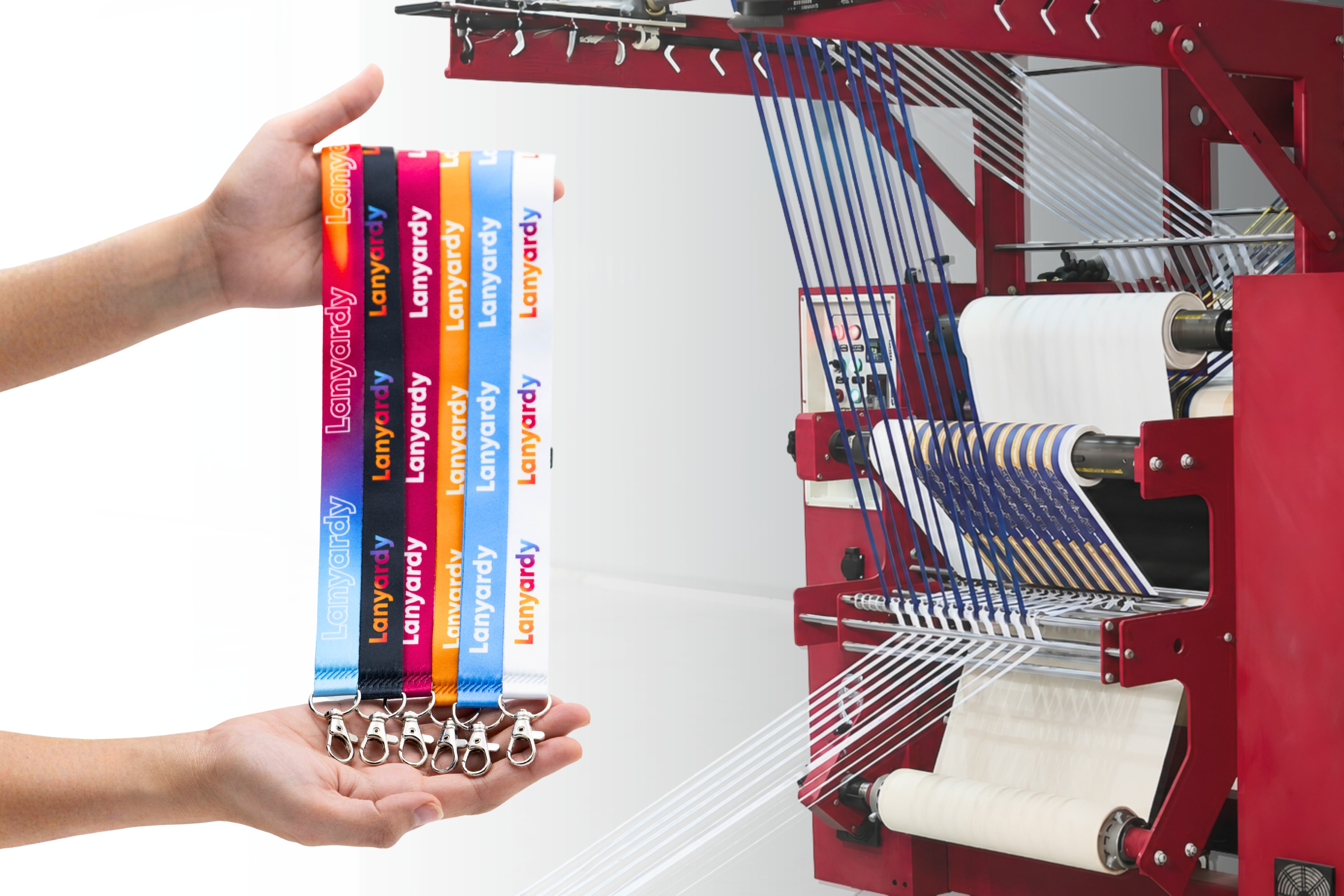
The standard. Smooth, durable, takes color and print exceptionally well. Works for virtually every use case — corporate events, conferences, office ID systems, exhibitions. The right choice for most orders and the material behind Lanyardy's premium-quality lanyards.
Recycled rPET
Made from recycled plastic. Same print quality and durability as standard polyester, with a sustainability credential that increasingly matters for organizations with environmental commitments or events with green policies.
Nylon
Some suppliers offer nylon as an alternative. It has a slightly different texture but offers no meaningful advantage over quality polyester for standard event and corporate use.
Which to choose? For most events and corporate use in Qatar — polyester. For organizations with sustainability requirements — rPET. Both print equally well and hold up under the same conditions.
Step 2: Decide on Width
Lanyard width affects how much of your design is visible and how the lanyard feels when worn.
15mm
Slim and discreet. Works for simple single-color designs or text-only branding. Common for office ID lanyards where subtlety is preferred over visibility.
20mm
The most common width. Enough space for a logo, text, and a repeating pattern. Balances visibility with comfort. When in doubt, this is the right answer.
25mm
Wide and bold. Maximum print real estate. Best for events where branding visibility is a priority — exhibitions, large conferences, sponsored events where the lanyard is as much a branding surface as a functional accessory.
Step 3: Plan Your Design
This is where most custom lanyard orders either succeed or fall short — and where first-time buyers are most likely to hit delays. It's also where having the right support makes the difference between a frustrating process and a smooth one.
What Goes on the Lanyard
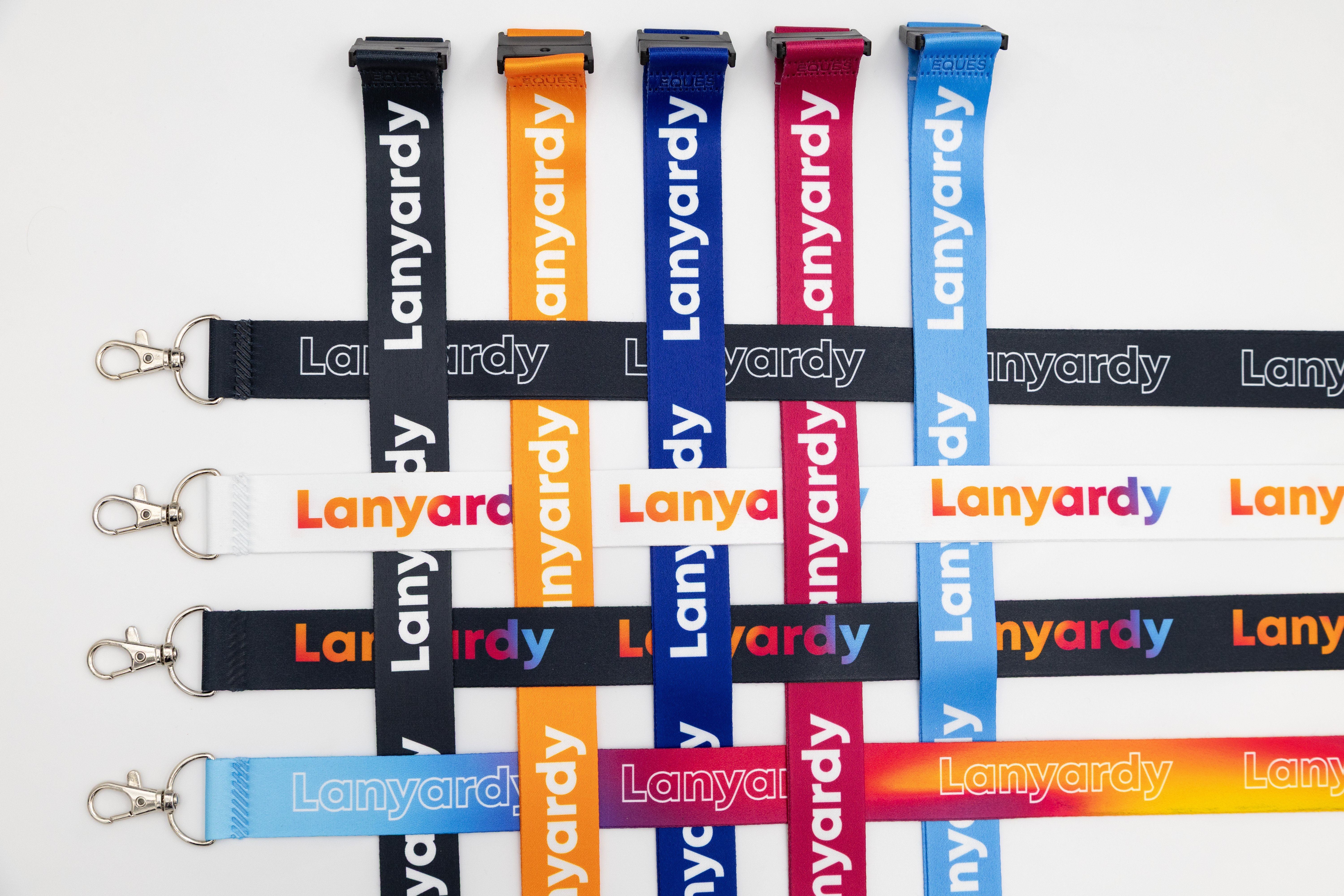
Logo, brand name, event name, a repeating pattern, or a combination — all are possible. The constraint is width and print resolution. A 25mm lanyard with a clean logo and brand name looks sharp. A 15mm lanyard with complex artwork looks cluttered. Simpler designs reproduce more accurately at smaller widths.
Not sure how your logo will look stretched across a 20mm strap, or which layout works best for your event? Lanyardy's™ design team can mock up your lanyard before anything goes to production — so you see exactly what you're getting before you approve it.
Color Matching
If brand color accuracy matters — and for corporate orders it usually does — specify your Pantone references when you brief your supplier. Don't rely on a screen preview to approve color. Monitors vary and what looks correct on screen can look noticeably different in print. Request a physical sample before approving a full production run.
Print Direction
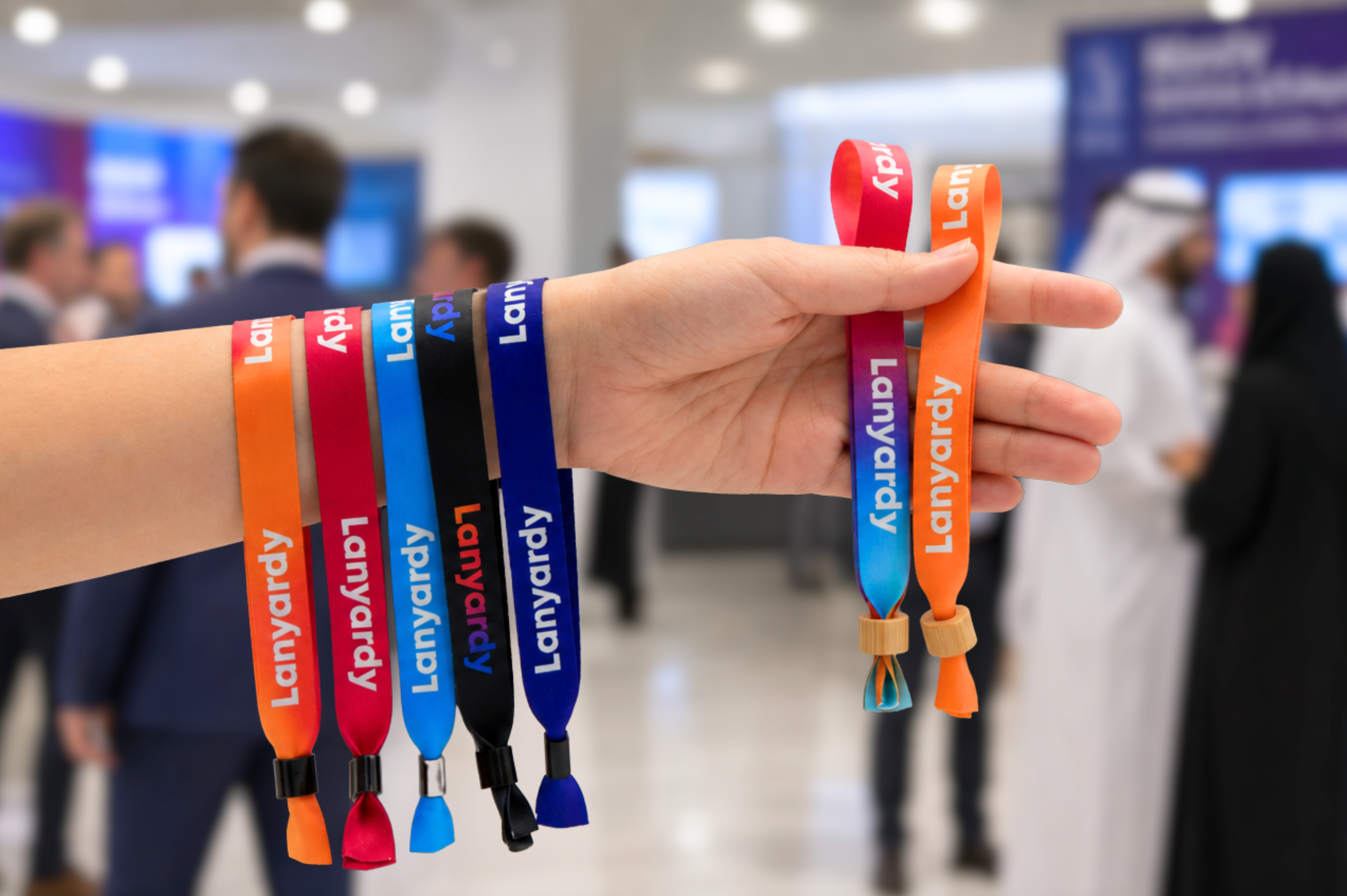
Lanyards can be printed so the design reads correctly top-to-bottom when hanging around the neck, or repeats continuously in a pattern. Decide which before briefing your supplier — this needs to be set before production begins.
Full Color or Single Color
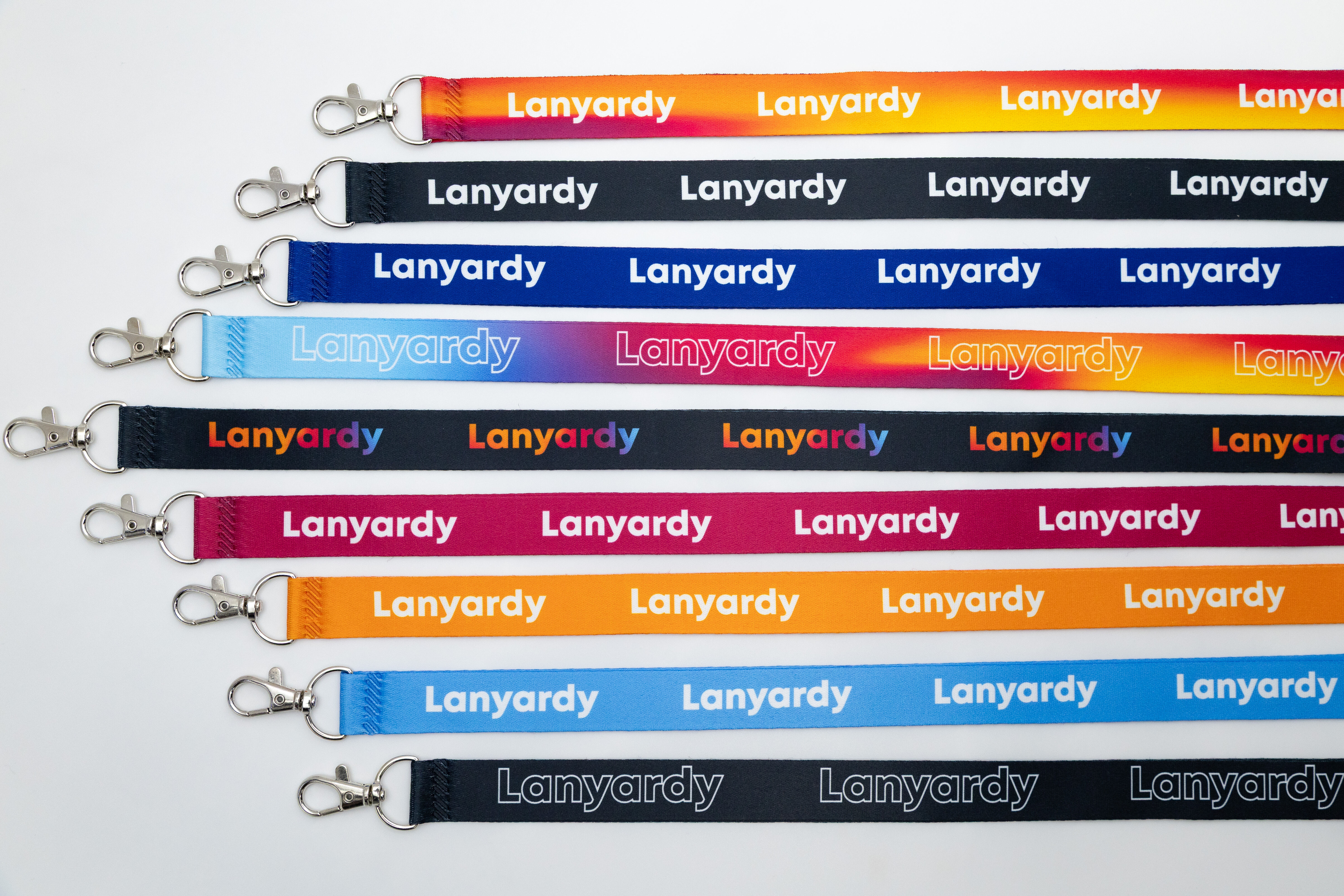
Heat transfer sublimation printing allows full-color, photographic-quality designs across the entire lanyard surface. Single-color is simpler for basic text or logo applications. For most branded lanyards, full color is worth it — the cost difference is small and the result is significantly better.
Step 4: Preparing Your Design File
This is the part first-time buyers most often get wrong — not because it's complicated, but because nobody told them what's needed. A wrong file format or low-resolution artwork can hold up production by days.
File Format
Suppliers need vector files — not images. The standard formats are:
- .AI (Adobe Illustrator) — preferred
- .EPS — widely accepted
- .PDF with embedded fonts and outlined text — works well
- .SVG — acceptable for simple designs
Do not send: JPG, PNG, or any raster image file unless it is extremely high resolution (300 DPI minimum at print size). A logo that looks sharp on your screen at small size will print blurry on a lanyard if it's a low-resolution image file.
Why Vector Matters
A vector file is built from mathematical paths, not pixels. It can be scaled to any size without losing quality. A raster image (JPG, PNG) is built from pixels and degrades when enlarged. On a lanyard printed at high definition, the difference is visible.
Color Mode
Your file should be set to CMYK color mode, not RGB. RGB is for screens. CMYK is for print. If your designer works in RGB, ask them to convert to CMYK before sending — colors can shift during conversion, so it's better to do this intentionally with your input than let the printer handle it automatically.
Fonts
All fonts in your file must be outlined (converted to paths) before sending. If fonts are live text and the supplier doesn't have the same font installed, your text will be substituted with a default font and your design will change. Outlining fonts prevents this entirely.
Don't Have the Right Files?
This is more common than you'd think. Many organizations have their logo saved as a JPG on someone's desktop and nothing else.
If you don't have a vector file, don't have a designer, or you're simply not sure where to start — Lanyardy's™ design team can create your artwork from scratch, redraw an existing logo into a print-ready vector, or build a full lanyard design from a brief. Send us what you have — even a photo of your logo on a business card — and we'll take it from there.
What to Include When Briefing Your Supplier
- Vector logo file (AI, EPS, or outlined PDF) — or a description if you need design help
- Pantone color references for brand colors
- Any specific text (event name, tagline, website)
- Print direction preference (top-to-bottom or repeating)
- Lanyard width and material already decided
The cleaner your brief, the faster production moves. And the earlier you flag that you need design support, the more time there is to get it right.
Step 5: Choose Your Hardware
The clip, buckle, and attachment at the end of the lanyard are often treated as an afterthought. They determine how the lanyard functions every day.
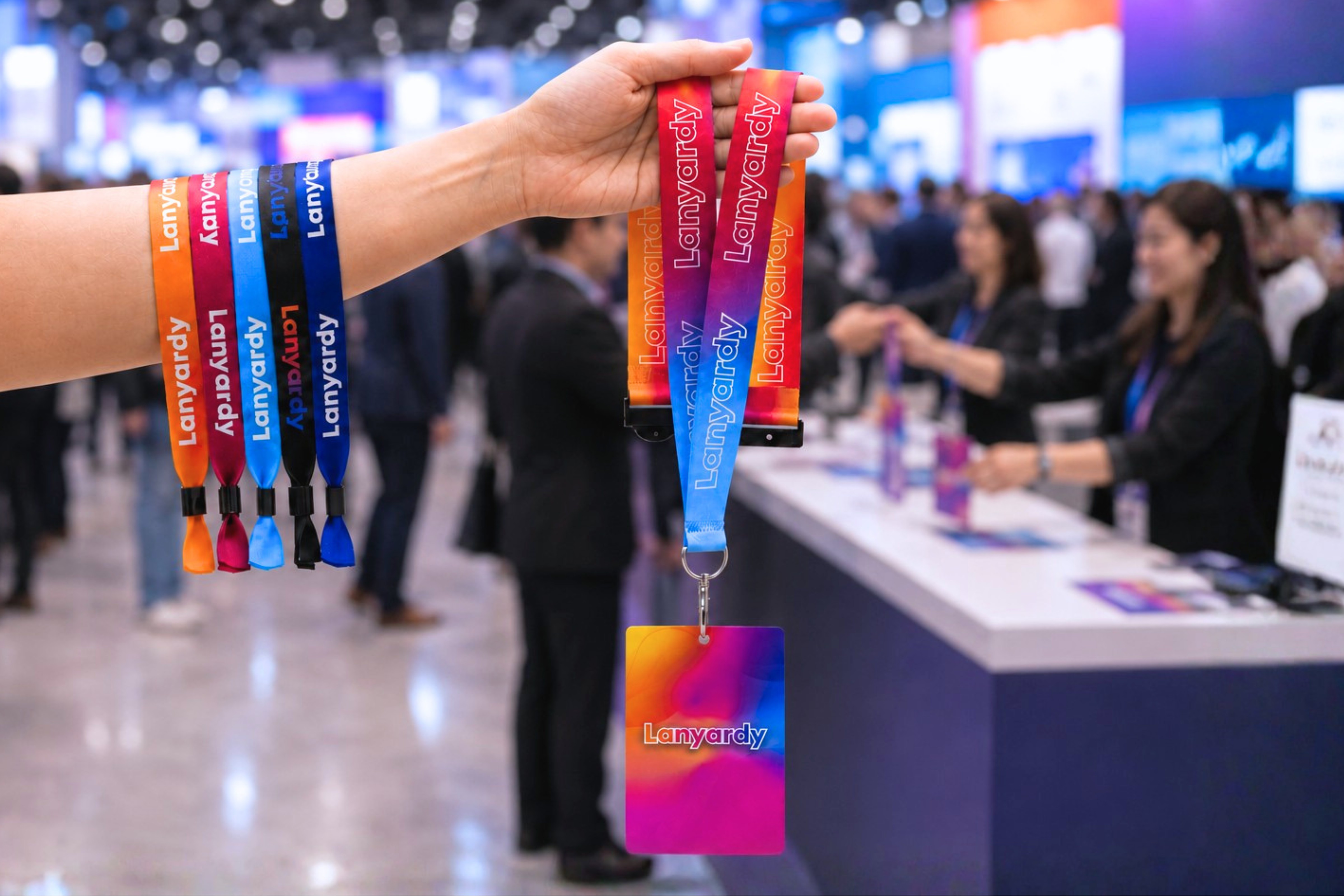
Single Hook
The standard. One metal or plastic clip attaches to a badge, ID card, or key. Works for most applications.
Double Hook
Two attachment points — useful when the lanyard needs to hold a badge on both sides, or when security and access cards are worn together.
Breakaway Buckle
A safety release that snaps open under pressure. Required in many workplace and school environments where a lanyard getting caught poses a risk. Worth including as standard for any setting where wearers are moving around equipment or machinery.
Safety Buckle
Similar to breakaway but releases more deliberately — less likely to open accidentally, more appropriate for events and corporate settings where accidental release would be inconvenient.
Badge Reel
A retractable reel that lets the wearer extend the badge to scan without removing the lanyard. Standard in office and access-control environments where repeated scanning throughout the day is normal.
Hardware Finish
Matte black, silver, and gold finishes are available. For high-end corporate lanyards worn daily, matching the hardware finish to the overall design is a detail that separates a considered order from a generic one. If you're unsure what works best with your design, our team can advise.
Step 6: Think About the Full Accreditation Set
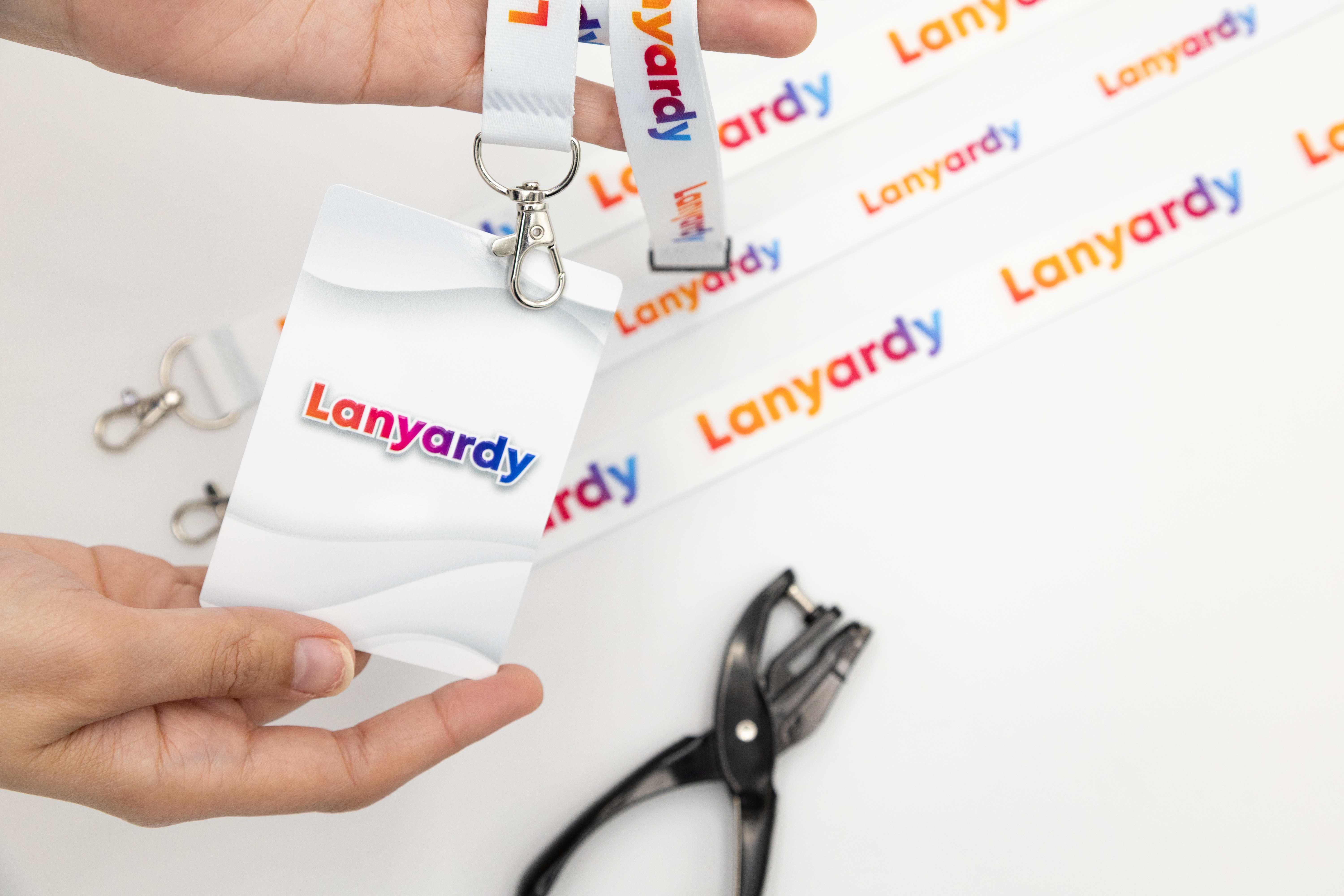
A lanyard doesn't exist in isolation. It holds a badge. That badge goes into a holder. That holder attaches via a clip.
If you're ordering custom lanyards for an event or office, the sizing, color, and hardware all need to be compatible with whatever the lanyard is holding. Order everything together from the same supplier and this is handled automatically. Order separately and you're matching components across different production runs — which is where sizing mismatches and color inconsistencies happen.
Lanyardy™ produces lanyards, badges, and accessories together as a complete set. One brief, one supplier, one delivery.
What to Ask Any Supplier Before Ordering
Do they manufacture locally or import? Local manufacturing means faster turnaround, easier communication for file revisions, and no customs delays. In Qatar, most suppliers resell imported lanyards. A manufacturer produces them here.
Can they handle design if you don't have files? Not all suppliers offer this. If your artwork isn't print-ready, knowing upfront whether your supplier can help — or whether you need to find a designer separately — saves time and stress.
Can they provide a physical sample before the full run? Essential for color-critical orders. A digital proof doesn't tell you how the finished lanyard looks and feels in person.
What's the minimum order quantity? A manufacturer built for volume may have higher minimums but significantly lower per-unit cost — which matters at scale.
Can they handle badges and accessories together? One supplier for lanyards, badges, holders, and hardware simplifies procurement, keeps branding consistent, and gives you one point of contact.
Common Mistakes to Avoid
Sending a low-resolution image file. The single most common cause of production delays. Always send a vector file — or tell your supplier upfront that you need design help.
Approving color from a screen. Always request a physical sample for color-sensitive orders.
Ignoring hardware compatibility. A clip that doesn't fit your badge holder is discovered at the worst possible moment. Confirm compatibility before production.
Underestimating quantity. It's almost always cheaper to order slightly more than you need than to run a second small batch later. Factor in extras for staff, replacements, and late additions.
Leaving it too late. Custom lanyards require design approval, production, and delivery. A local manufacturer compresses this window considerably — but last-minute orders still cost more and leave less room for corrections.
Custom Lanyards in Qatar
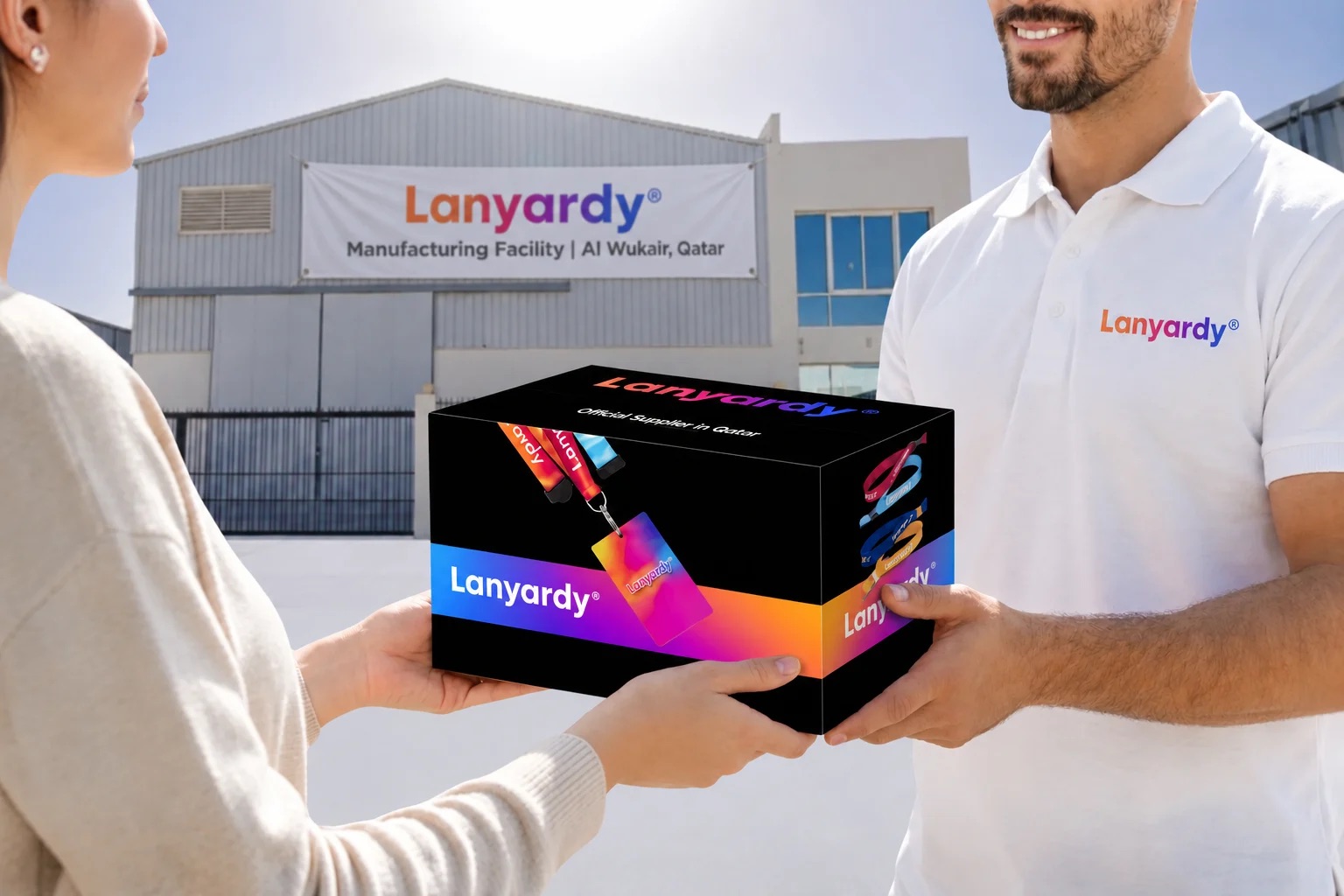
Lanyardy™ manufactures custom lanyards at our facility in Al Wukair, Qatar. Polyester and rPET tape, heat transfer sublimation printing, full hardware range — with an in-house design team for clients who need artwork support from the start.
We produce 1,000 lanyards in around four hours and scale to 20,000 within 48 hours after artwork approval. Lanyards, badges, and accessories from one supplier, one order, one delivery.
See materials, specs and accessories →