If you have ever worn a staff badge at a conference, tapped an access card at a office entrance, or carried a membership card in your wallet, you have already used a PVC card. Despite being everywhere in daily professional life, most people never stop to think about what these cards are made of, why they are the industry standard, or how to choose the right one for their needs.
This article covers everything you need to know about PVC cards — what they are, what they are made of, the sizes available, how they are printed, and how to choose between PVC and the newer eco-friendly PLA alternative.
What PVC Cards Are Made Of
PVC stands for polyvinyl chloride, a type of rigid synthetic plastic that has been used in card manufacturing for decades. It became the dominant material for ID cards, badges and passes because it strikes the right balance between durability, flexibility, print quality and cost.
A PVC card is smooth on both sides, resistant to everyday wear, and holds printed ink without fading or cracking under normal conditions. This makes it well suited for cards that are handled daily — swiped, scanned, clipped to a lanyard, or carried in a pocket or wallet.
Because PVC is a plastic, it is also waterproof and does not warp or soften in humid environments, which matters in Qatar's climate where heat and occasional moisture can affect lesser materials.
Common Uses of PVC Cards
PVC cards are used across virtually every sector that requires identification, access control, or brand representation. The most common applications include:
Employee and staff ID cards — Organisations issue PVC staff IDs to identify employees, control access to floors or facilities, and maintain a professional appearance across the team. The card typically carries a photo, name, job title, and company logo.
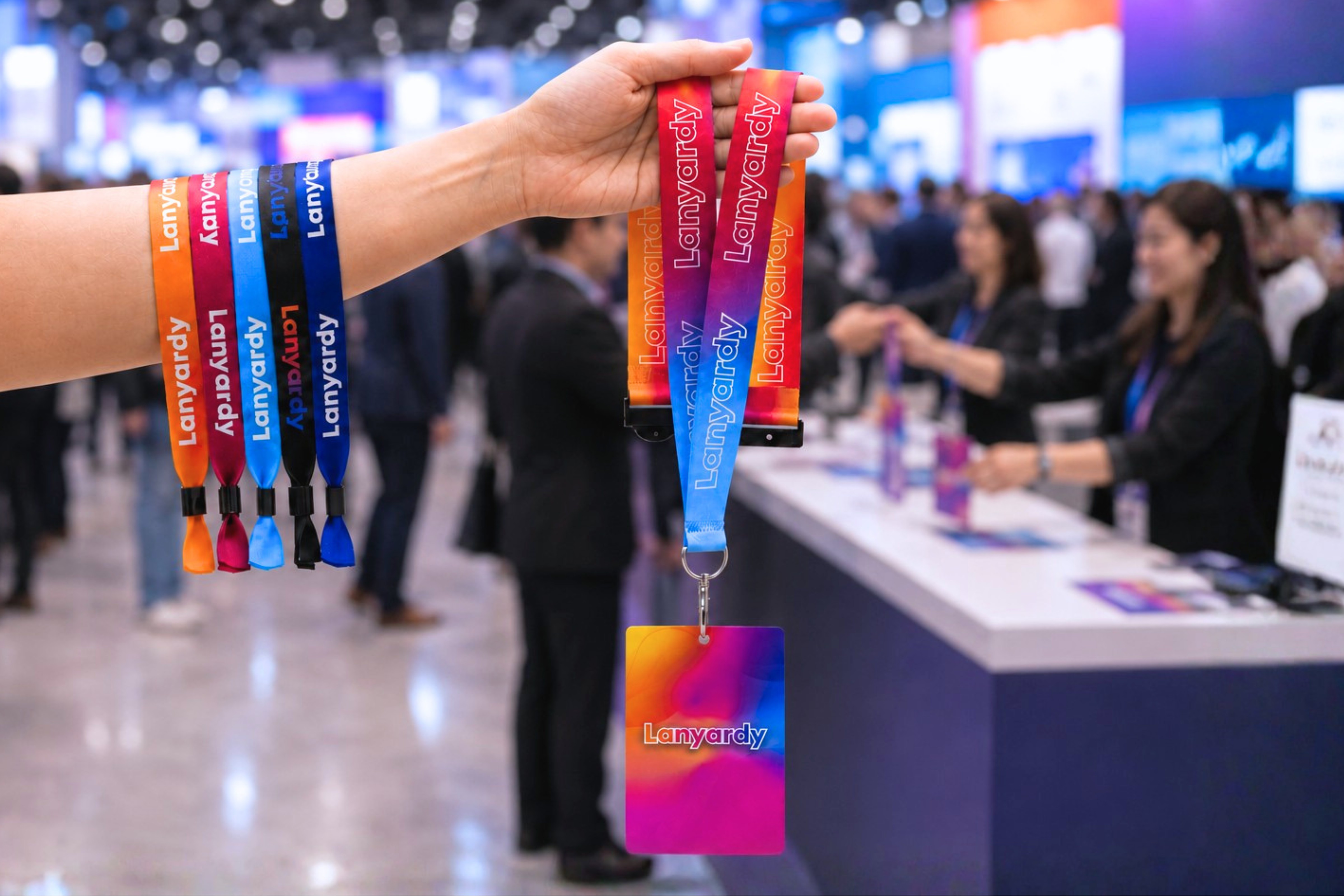
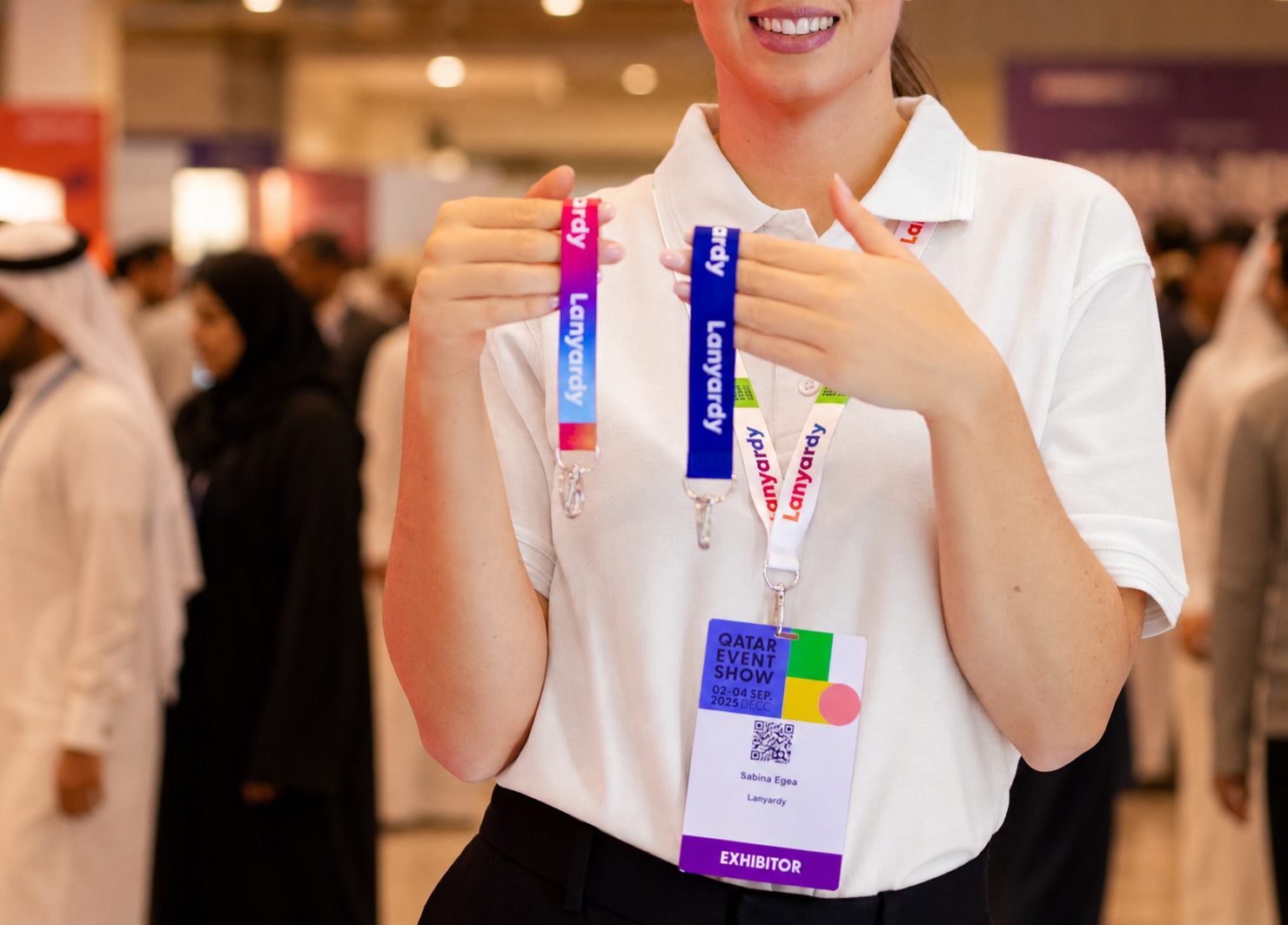
Event badges and accreditation passes — Conferences, exhibitions, trade shows, and large-scale events use PVC badges to distinguish between attendees, staff, media, VIPs, and security personnel. The card's durability means it holds up across multi-day events without fading or creasing.
Visitor cards — Reception desks issue temporary visitor PVC cards that identify guests and indicate which areas they are permitted to access. These are often reused or collected at exit.
Student ID cards — Schools and universities rely on PVC student IDs for campus access, library services, canteen accounts, and transportation passes.
Membership and loyalty cards — Gyms, clubs, retail programs and professional associations issue PVC cards to members for access, discounts, and identification. A well-designed membership card also reinforces brand recognition every time it is used.
Government and security passes — Public sector entities and high-security environments use PVC cards with added security features such as barcodes, QR codes, or RFID chips for controlled access.
PVC Card Sizes Explained
Card size is one of the most practical decisions when ordering PVC cards. The right size depends on how much information the card needs to display, how it will be used, and whether it needs to fit in a standard holder, lanyard sleeve, or wallet.
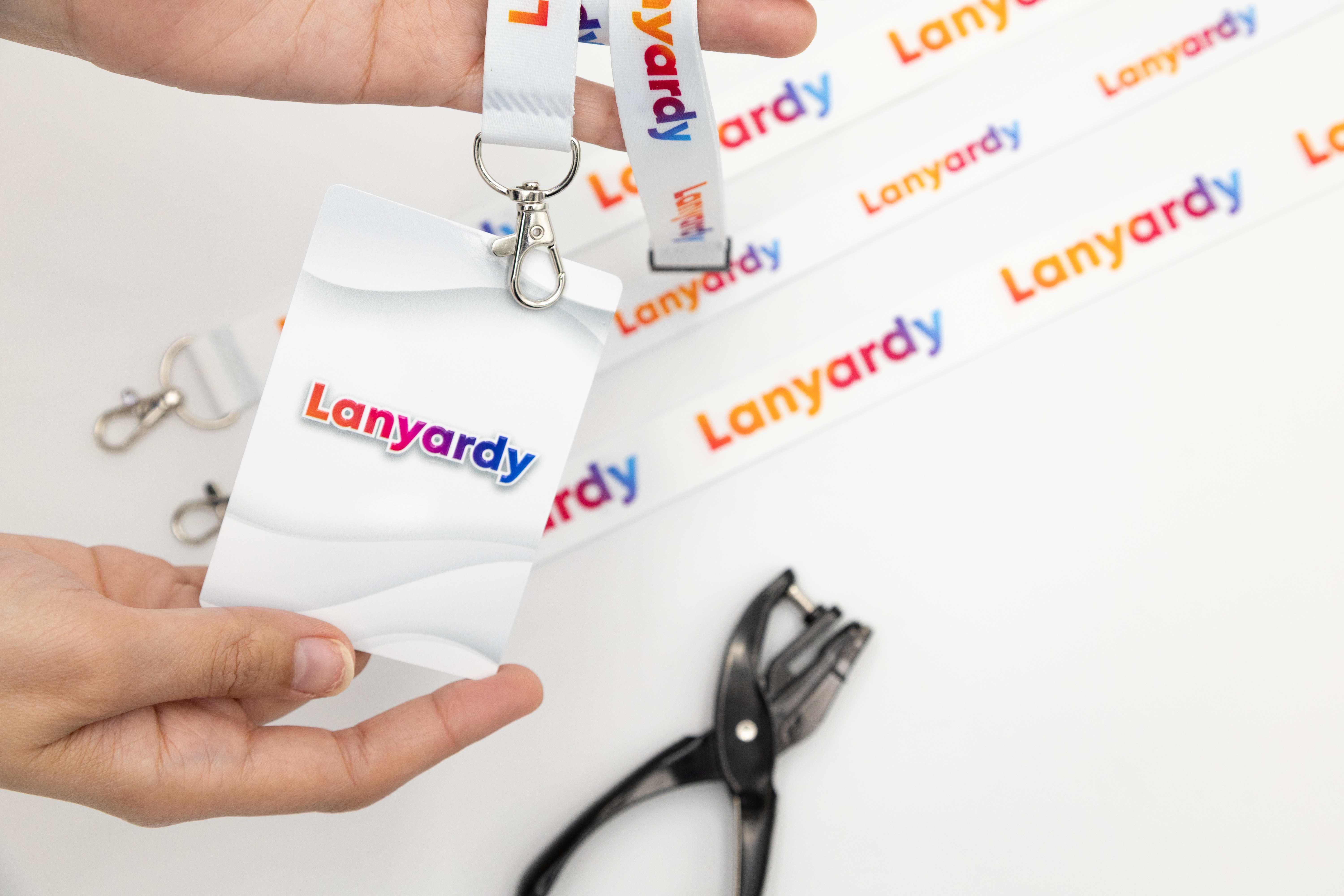
At Lanyardy, we produce PVC cards in three standard sizes to cover the full range of event, corporate, and institutional needs.
CR80 — 85.6 × 54 mm
The CR80 is the universal standard for ID cards and is the same dimensions as a credit card. It is the most widely used format globally and the default choice for most organisations.
Its compact size makes it ideal for everyday carry — it fits in a wallet, a standard ID holder, or a lanyard badge reel without any modification. It is the right choice for employee ID cards, student cards, access control cards, membership cards, loyalty cards, and any application where the card needs to be discreet and portable.
If you are unsure which size to order, CR80 is almost always the correct starting point.
CR100 — 70 × 100 mm
The CR100 is taller than the CR80, measuring 70 mm wide by 100 mm tall. This extra vertical space makes it popular for event badges, conference passes, and accreditation cards where more information needs to be displayed clearly.
At events, a CR100 badge can comfortably show a full name, organisation, role, photo, QR code, and logo without crowding the design. It is also easier to read at a glance from a distance, which is valuable in busy exhibition halls or multi-zone event venues where staff need to quickly identify attendees by role.
The CR100 fits most standard portrait badge holders and lanyard sleeves used in event management.
CR200 — 90 × 140 mm
The CR200 is Lanyardy's largest format, measuring 90 mm wide by 140 mm tall. It is designed for situations where maximum visibility and information density are required.
Large format passes like the CR200 are commonly used for VIP accreditation, press and media badges, and multi-day conference passes at major events. The generous surface area allows for bold typography, large logos, zoning information, QR codes, barcodes, and colour-coded sections — all without the design feeling compressed.
For event organisers managing hundreds or thousands of attendees across multiple zones, the CR200 provides a clear visual hierarchy that makes access control faster and reduces confusion on the ground.
How PVC Cards Are Printed — UV Technology
The print method matters as much as the card material. At Lanyardy, all PVC and PLA badges are produced using UV high-definition printing — a process where ultraviolet light-cured inks are applied directly to the card surface and then hardened instantly under UV light.
The result is a print that is sharper, more vivid, and significantly more resistant to scratching and fading than conventional inkjet or dye-sublimation printing. UV-printed badges maintain their quality across weeks of handling at events, daily use in offices, and repeated exposure to sunlight and humidity.
Badges can be finished in either matte or gloss:
- Matte finish gives a premium, modern appearance and reduces glare under strong lighting — particularly useful at exhibitions and outdoor events
- Gloss finish makes colours more vivid and photographs more striking — a popular choice for branded corporate IDs and VIP passes
Both finishes fully support QR codes and barcodes, which can be integrated directly into the card design for access control systems, registration scanning, or digital check-in at events.
PVC vs PLA — Which Should You Choose?
PLA stands for polylactic acid, a bioplastic derived from renewable plant sources rather than petroleum. Lanyardy offers PLA as an eco-friendly alternative to standard PVC cards, and the choice between the two comes down to your organisation's priorities.
Choose PVC if your primary concern is cost efficiency, you need maximum durability for long-term daily use, or you are ordering in very high volumes where material cost is a significant factor. PVC cards are robust, proven, and widely supported by all badge holder and accessory formats.
Choose PLA if your organisation has sustainability commitments, your event is positioning itself as environmentally responsible, or you want to reduce the plastic footprint of a large-scale production run. PLA cards look and feel nearly identical to PVC in print quality and finish, and they carry the same UV printing performance.
For events and organisations in Qatar that are increasingly focused on ESG reporting and sustainability credentials, the PLA option is a practical way to make accreditation part of a broader environmental commitment without any compromise on visual quality.
How to Order PVC Cards in Qatar
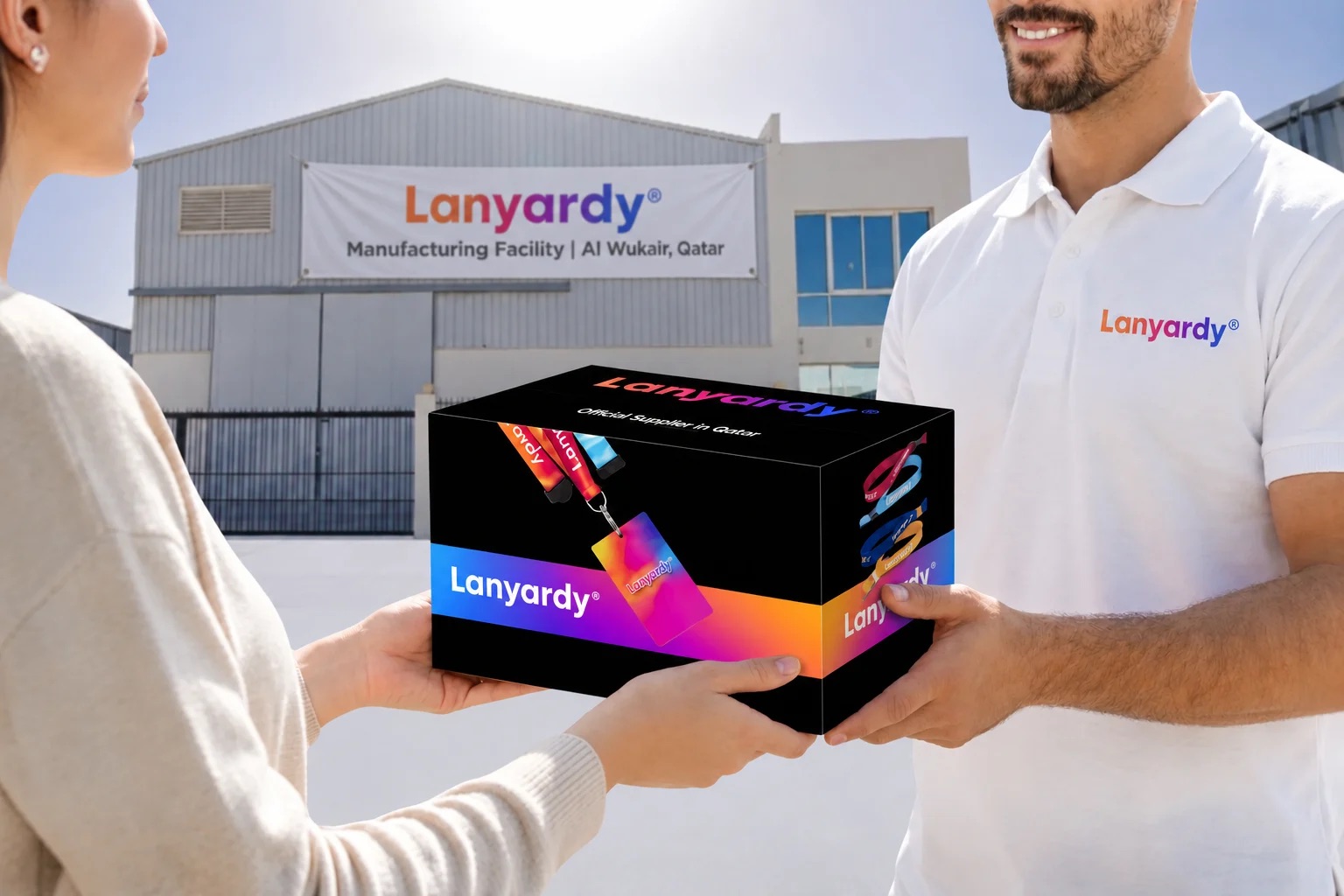
Lanyardy manufactures PVC and PLA badges at our factory in Al Wukair, Qatar. We supply event organisers, corporate offices, schools, government entities, and agencies across Qatar and the wider GCC region, including deliveries to KSA and UAE.
Our UV printing lines can produce 1,000 badges in approximately 4 hours and scale to 10,000 badges within 48 hoursof artwork approval — making Lanyardy a reliable choice for both planned bulk orders and urgent last-minute requirements.
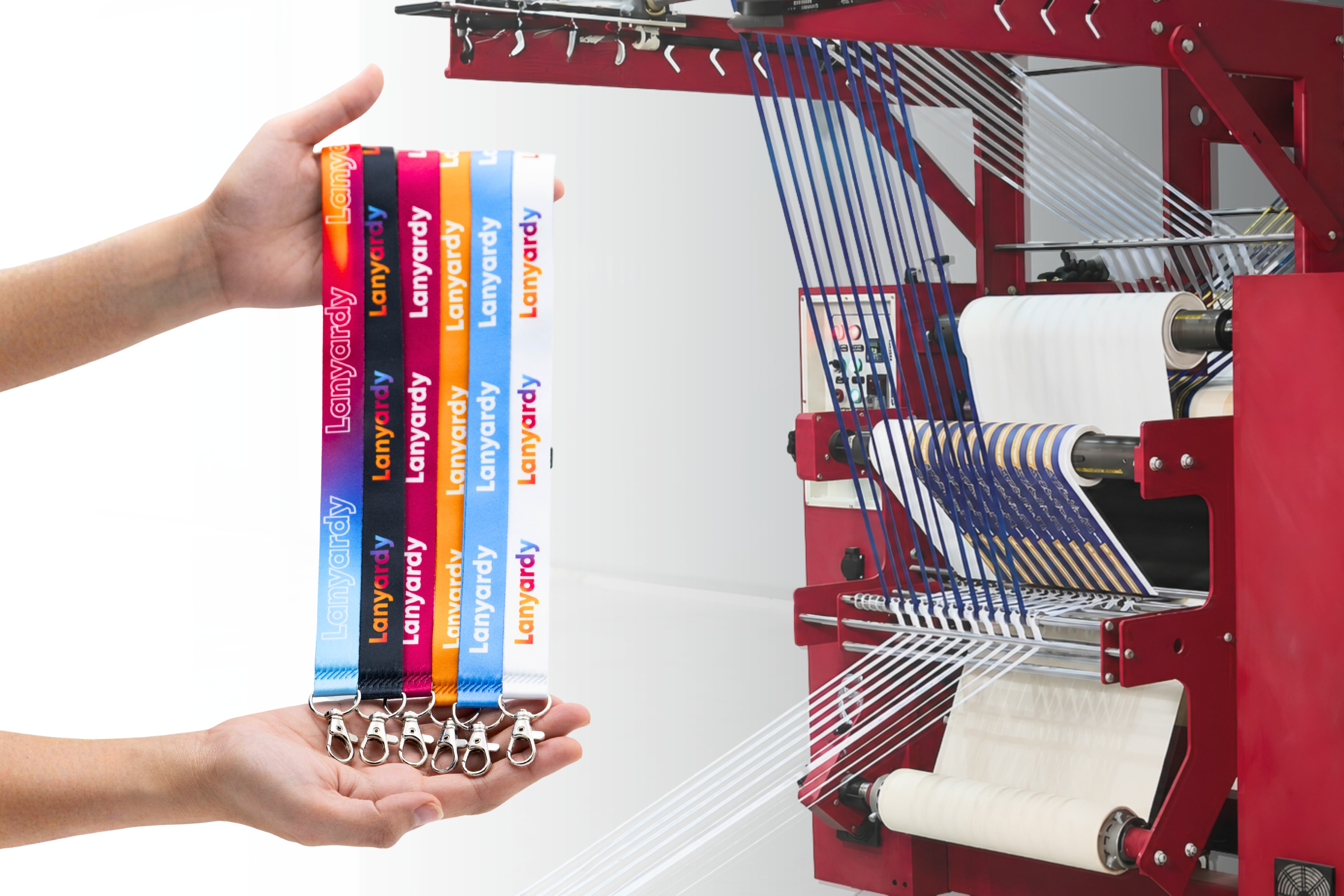
We supply badges together with matching lanyards, badge holders, hooks, and accessories so you can manage the entire accreditation package through a single supplier, keeping branding consistent and procurement simple.
To get a quote or discuss your badge requirements, visit our Badges page or contact our team directly.
Frequently Asked Questions
What is the standard size for a PVC ID card? The standard size is CR80, measuring 85.6 × 54 mm — the same dimensions as a credit card. It fits all standard wallets, ID holders, and lanyard sleeves.
What is the difference between PVC and PLA cards? PVC is a conventional synthetic plastic, while PLA is a bioplastic made from renewable plant sources. Both deliver the same print quality and durability, but PLA is the more environmentally responsible choice.
Can PVC badges include QR codes and barcodes? Yes. Lanyardy's UV-printed badges fully support QR codes and barcodes integrated into the card design, compatible with most access control and event check-in systems.
What sizes does Lanyardy offer for PVC badges? Lanyardy produces badges in three sizes: CR80 (85.6 × 54 mm), CR100 (70 × 100 mm), and CR200 (90 × 140 mm).
How quickly can PVC badges be produced in Qatar? Lanyardy can produce 1,000 badges in approximately 4 hours and 10,000 badges within 48 hours of artwork approval, from our factory in Al Wukair, Qatar.
Looking for custom badges for your next event or office? Get a quote from Lanyardy — Qatar's local UV badge manufacturer.